
Written by: Oluwadamilola Ade Adebamipe
I began my career not behind a desk, but deep in engine rooms—where the realities of ocean use are loud, physical, and impossible to ignore. As a marine engineer, I spent over a decade working onboard vessels and within port operations, maintaining the systems that keep ships moving safely and efficiently.
Those early years shaped how I see the ocean: not simply as a resource, but as aliving system that supports global trade, coastal communities, and marine ecosystems. Working at sea teaches you quickly that every operational decision has consequences. Fuel consumption, engine efficiency, maintenance practices, and voyage planning are not just technical considerations—they directly influence emissions, pollution risks, and the long-term health of marine environments.
When you are responsible for the machinery that powers vessels across oceans, you develop a deep respect for the balance between economic activity and environmental stewardship. Over time, however, I began to notice a recurring gap in how many maritime decisions are made. Ships and ports generate enormous amounts of operational data every day, from fuel consumption records and maintenance logs to voyage performance reports and emissions monitoring. Yet much of this information remains underutilized or disconnected from the people responsible for improving operational performance and environmental outcomes.
This realization led me to reflect on a simple but important question: What if the data generated by vessels and ports could be used more effectively to protect the ocean?
That question eventually led me to establish DeeMarine Analytics, a maritime data and analytics initiative focused on translating operational marine data into meaningful insights for decision-makers. The goal is not to replace the knowledge of engineers, seafarers, or port professionals, but to support their expertise with clear, data-driven visibility into operational performance.
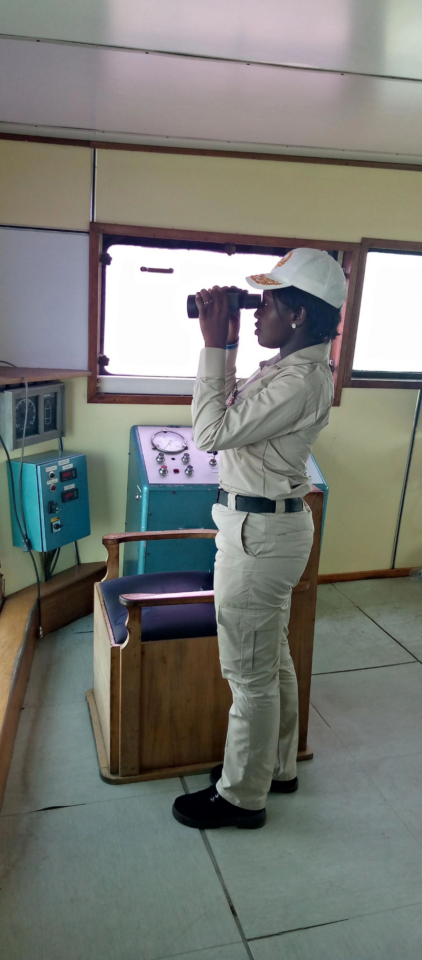
The work of DeeMarine Analytics sits at the intersection of marine engineering, operational efficiency, and environmental sustainability. By analyzing trends in fuel consumption, vessel performance, maintenance reliability, and port operations, it becomes possible to identify patterns that help organizations improve efficiency while reducing environmental impact.
For example, small inefficiencies in fuel consumption can accumulate into significant emissions over time. Maintenance delays or equipment performance issues can increase fuel use or introduce environmental risks. When these patterns are visualized clearly through dashboards and operational analytics, organizations are better equipped to make informed decisions that improve both performance and sustainability. This approach aligns closely with Sustainable Development Goal 14: Life Below Water, which calls for the conservation and sustainable use of oceans, seas, and marine resources. While SDG 14 is often discussed in the context of conservation or marine biodiversity, it also applies directly to how we operate the vessels and infrastructure that depend on the ocean.
Ships transport more than 80 percent of global trade, and ports serve as critical hubs connecting economies and communities. Improving the efficiency and sustainability of these systems represents one of the most practical pathways toward protecting marine environments while supporting economic development.
In many ways, ocean protection is not only about advocacy—it is about systems thinking. Ships, ports, logistics networks, and coastal infrastructure form complex operational ecosystems. Understanding how these systems function and where improvements can be made is essential to reducing environmental impact at scale.
My own journey from marine engineering to data analytics has reinforced the importance of bridging technical knowledge with digital tools. Engineers and seafarers understand the realities of vessel operations. Data analysts and technologists bring new capabilities for interpreting complex information. When these perspectives come together, they create opportunities for innovation that benefit both industry and the environment.
Education and collaboration are also key parts of this process. As someone involved in maritime education and training, I have seen how younger professionals are increasingly interested in combining engineering, technology, and sustainability. Empowering the next generation with the tools to analyze data and understand operational systems will be critical to the future of the maritime sector.
Being part of Ocean Alliance Canada reinforces the importance of collective action in protecting our oceans. Organizations like Ocean Alliance Canada bring together professionals, researchers, and community voices who share a commitment to healthier marine environments. These collaborations create space for new ideas and solutions that connect operational realities with long-term ocean stewardship.
Ultimately, the transition toward more sustainable maritime operations will require both technological innovation and practical experience. Data alone cannot solve complex environmental challenges, but when combined with the insights of those who work on and around the ocean every day, it becomes a powerful tool for change.
From sea to screen, the mission of DeeMarine Analytics is simple: to help transform everyday operational data into actionable insights that support safer vessels, more efficient ports, and healthier oceans for future generations.

Warm regards,
Oluwadamilola Ade Adebamipe
Marine Engineer | Maritime Data Analyst
Founder, DeeMarine Analytics
LinkedIn: Oluwadamilola Adebamipe | LinkedIn
Business Email: info@deemarineanalytics.ca